Stop Home Office Procrastination in Hours
This post reveals the psychology behind why you procrastinate at home and walks you through six behavioral shifts that work within 24 hours. You’ll regain control of your schedule and finally complete projects without the guilt of wasted time.

Your laptop sits open on the kitchen table for three hours. You’ve checked social media fourteen times already. Learning how to stop procrastinating when working from home starts with designing your space to remove friction.
How to Stop Procrastinating When Working From Home Using Physical Boundaries
You need a door you can close. This matters more than desk quality or chair price. A closed door tells your brain work happens here. It tells other people you’re unavailable right now.

Most remote workers try to work from their couch. This fails because your brain links that couch with Netflix. You’ve trained yourself to relax there for years. Changing that association takes months of deliberate effort.
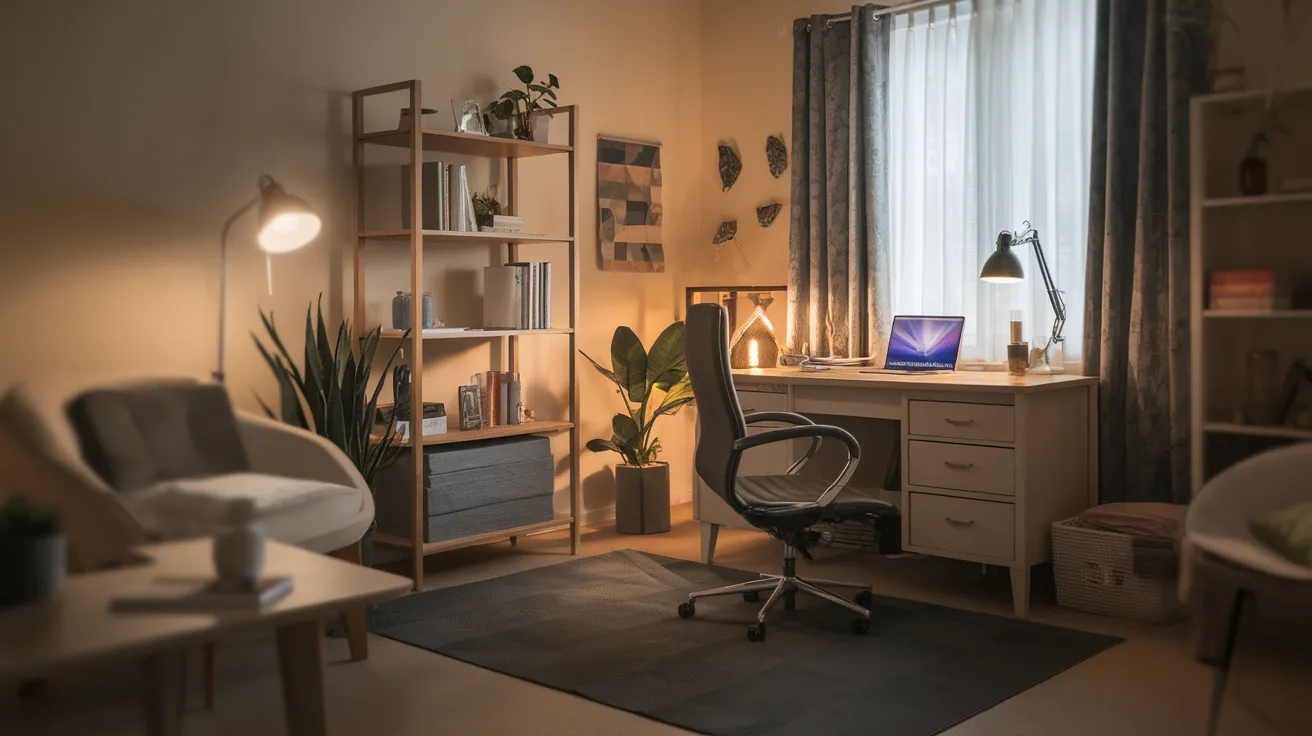
Create a space used only for work. A corner of your bedroom works if you lack options. Face the wall instead of facing your bed. Your field of vision shapes your mental state more than you realize.
Leave that space when you finish working. Walk away physically. This trains your brain to separate work mode from rest mode. Without this separation, you’ll procrastinate during work hours and feel anxious during rest hours.
The Calendar Block Method to Stop Procrastinating When Working From Home
Your phone calendar should show every hour accounted for. Not just meetings. Everything. Block 9am to 10am for deep work. Block 10am to 10:15am for coffee.
This removes decision fatigue. You never ask yourself what to do next. The calendar tells you. You either follow it or you don’t.
Most people leave gaps in their schedule. Those gaps become procrastination zones. You think you’ll use them productively. You won’t. Something will always fill that empty space, and it’s usually scrolling.
Schedule breaks longer than you think you need. Thirty minutes, not fifteen. You’ll actually take them instead of working through them poorly. A real break prevents the mental fatigue that causes afternoon procrastination.

Put your hardest task in your first work block. Your willpower peaks in the morning. It depletes throughout the day. Fighting this pattern is pointless.
How Accountability Systems Stop Procrastinating When Working From Home
Text one person what you’ll finish by noon. Text them again at noon with proof. This simple system works better than any app.
The person doesn’t need to care about your work. They just need to expect your message. That expectation creates external pressure. External pressure overrides internal resistance.
Join a coworking video session. Sites exist where strangers work on camera together. Nobody talks. You just see other people working. This tricks your brain into matching their behavior.
Share your screen with a colleague for one hour. Knowing someone watches prevents you from switching tabs. It feels uncomfortable at first. That discomfort is the point.
Book a meeting with yourself at the end of each day. Review what you finished. Write down what you avoided. Patterns emerge quickly when you track them daily.
Removing Digital Distractions to Stop Procrastinating When Working From Home
Your phone should sit in a different room during work blocks. Not face down on your desk. Not in your pocket. A different room entirely.

You’ll panic the first time you try this. That panic proves how much your phone controls you. The panic fades after twenty minutes. Your focus improves immediately after that.
Delete social media apps from your phone. Keep them on your computer only. Add friction to access them. Log out after each use so you must log in again.
Every login creates a moment where you can choose differently. Most people skip this because it seems like too much hassle. Too much hassle is exactly what stops procrastination.
Use a separate browser for work. Firefox for work, Chrome for personal browsing. Never mix them. Your brain will learn to focus when you open the work browser.
Block websites during work hours using router settings. Browser extensions don’t work because you’ll disable them. Router blocks require more effort to bypass. That effort gives you time to reconsider.
The Task Size Problem and How to Stop Procrastinating When Working From Home
You procrastinate because your tasks feel too big. “Write report” triggers avoidance. Your brain can’t picture the steps involved. Uncertainty creates paralysis.
Break every task into steps under thirty minutes. “Write report” becomes “open template, write first paragraph, review data for section two.” Each step feels manageable. Manageable tasks get done.
Write these steps the day before. Never plan your work the same day you do it. Morning planning eats your peak energy hours. You’ll spend ninety minutes deciding what to do instead of doing it.
Start with the smallest possible version. Don’t write the whole email. Write the subject line. Starting defeats procrastination more than finishing does. Momentum builds from small wins.
Energy Management Strategies for Working From Home Without Procrastinating
You can’t focus for eight straight hours. Stop trying. Your brain needs rest cycles every ninety minutes. Pushing past this creates fake productivity where you’re present but useless.
Stand up and move every hour. Walk to another room. Do ten pushups. Movement resets your attention span. Sitting drains focus faster than mental effort does.
Eat protein before work blocks. Carbs spike your blood sugar then crash it. That crash at 10:30am makes you scroll instead of work. A protein breakfast prevents this entirely.
Track your energy patterns for one week. Note when you feel sharp and when you feel foggy. Schedule hard work during sharp hours. Schedule easy tasks during foggy ones. Most people do the opposite and wonder why they struggle.
Stop working when you’re truly done. Remote work culture pressures you to stay online until evening. This trains you to stretch tasks unnecessarily. Finish in five hours and actually stop working.
How to Stop Procrastinating When Working From Home By Changing Your Rewards
Your brain seeks dopamine hits. Social media provides them instantly. Work provides them after hours or days. This timing difference explains most procrastination.
Build immediate rewards into work completion. Finish a task, then take a ten minute walk outside. Your brain starts associating work with the pleasant walk. This rewires your motivation system over time.
Never reward yourself before finishing. Promising yourself treats after work doesn’t work either. The reward must come within five minutes of task completion. Delayed rewards don’t change behavior.
Make procrastination boring. When you catch yourself scrolling, don’t fight it. Just sit there doing nothing instead. Stare at the wall for five minutes. You’ll choose work over boredom quickly.
Change your environment after completing something difficult. Work in the kitchen until lunch, then move to your desk. The location change signals progress. Your brain likes progress tracking.
Frequently Asked Questions
Why do I procrastinate more at home than in an office?
Offices provide external structure and social accountability. You lack both at home. Your environment contains more comfort cues and fewer work cues. This makes starting harder.
How long does it take to stop procrastinating consistently?
Building new work habits takes three to four weeks of daily practice. The first week feels extremely difficult. The second week feels slightly easier. Month two shows real change.
What should I do when I’ve already wasted half the day?
Start a twenty minute work block right now. Don’t wait until tomorrow or after lunch. One completed task changes your momentum. The day isn’t lost until you decide it is.
Can I work from home successfully if I have ADHD?
Yes, but you need more structure than other people. Use timers for every task. Work in shorter blocks. Build in more movement breaks. External accountability becomes even more important.
Is it better to work fixed hours or flexible hours at home?
Fixed hours work better for most people. Flexibility sounds appealing but creates decision fatigue. You’ll spend energy deciding when to work instead of actually working. Pick a schedule and repeat it daily.
Close your laptop right now and set up tomorrow’s calendar with specific task blocks.