Work From Home Burnout Starts Here Stop It Now
This guide shows remote workers how to create genuine separation between professional and personal life without sacrificing productivity or presence. You’ll discover the exact boundaries and environmental shifts that prevent work from bleeding into every hour of your day.
Your laptop sits on the kitchen table at 9pm. Dinner plates are stacked next to your mouse. Work emails arrive while you’re watching TV with your family. The answer is creating physical and mental boundaries that protect both parts of your day.
How to Separate Work and Life When You Work From Home With a Dedicated Workspace
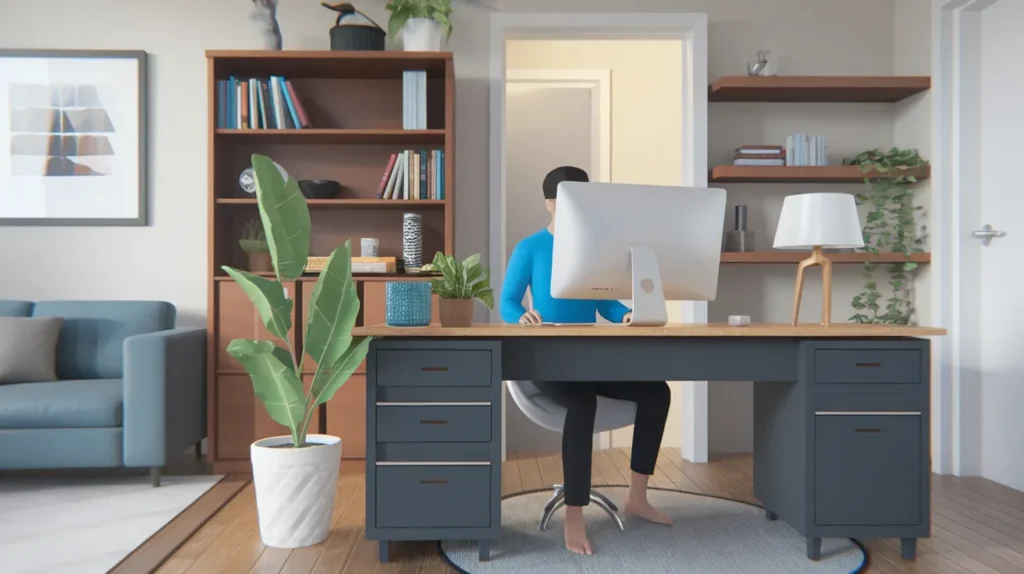
You need a room with a door. A spare bedroom works best. A converted closet can work too. The space doesn’t need to be large. It needs to be separate from where you eat and relax.

Set up your desk facing away from the door. Put your monitor at eye level. Keep only work items in this room. No laundry baskets. No exercise equipment. No toys from the kids.
When you walk into this room, your brain switches to work mode. When you walk out, you’re done. This simple action replaces the commute you used to have.
Some people share small apartments. You can still create separation. Use a folding screen to divide your bed from your desk. Face your work area toward a wall, not your living space.
The rule is simple. Work happens in one spot only. You don’t answer emails from the couch. You don’t take calls from bed. One location equals work. Everywhere else equals life.
Setting Strict Work Hours When You Work From Home
Pick your start time. Write it down. Pick your end time. Treat both like appointments you can’t miss.
Your coworkers need to know when you’re available. Put your hours in your email signature. Set your messaging app to show “away” outside those times. Turn off all work notifications after your end time.
Here’s what actually happens without set hours. You check email at 7am. You respond to a message at 10pm. Your team learns you’re always available. They start expecting instant replies at any hour.

You trained them wrong.
Start over. Tell everyone your new schedule. Say you won’t respond outside these hours except for real emergencies. Define what counts as an emergency. A server crash counts. An idea for next month’s meeting doesn’t count.
Your family needs clear hours too. Tell your partner when you’re working. Tell your kids not to interrupt unless someone is hurt. They’ll test this rule. Hold firm the first week. They’ll learn.
How to Separate Work and Life When You Work From Home Through Shutdown Rituals
You need a final action that marks the end of work. This replaces leaving the office building. It signals to your brain that work is over.
Close all work tabs on your browser. Shut down your computer completely. Don’t just close the lid. Full shutdown. This takes 30 seconds and creates a hard stop.
Write tomorrow’s top three tasks on paper. Put your notebook in a drawer. Unplug your laptop and put it away if possible. The device should disappear from view.
Some people change clothes. You put on work clothes at 9am. You change back at 5pm. Your brain registers this costume change as a transition.

Others take a short walk around the block. This mimics a reverse commute. You leave your house for 10 minutes. When you return, you’re home from work.
Pick one ritual. Do it every single day. Your brain will learn this pattern within two weeks. The ritual becomes a trigger for mental separation.
Managing Communication Boundaries to Separate Work and Life
Delete work apps from your personal phone. Slack doesn’t belong next to your text messages. Teams shouldn’t send you notifications while you eat dinner.
Use a separate device for work if your company provides one. Keep that phone in your workspace. Leave it there when you finish for the day.
Can’t get a second phone? Create separate user profiles on your device. Android and iPhone both allow this. Switch profiles when work ends. The work profile stays logged out until morning.
Email is the biggest problem. You need to stop checking constantly. Set specific times to read messages. Check at 9am, noon, and 4pm. Close your email app between these times.
Tell people about your email schedule. Put it in your signature. Say you check three times per day. Provide your phone number for urgent matters. Almost nothing is actually urgent.
Turn off all email notifications. The red badge on your app creates anxiety. You don’t need to know an email arrived. You’ll see it during your next scheduled check.
How to Separate Work and Life When You Work From Home Using Physical Transitions
Your morning routine should prepare you for work. Shower before you start. Get dressed in real clothes. Don’t work in pajamas.
Make coffee or tea as part of your morning work prep. This becomes your pre-work ritual. The smell and taste signal that focused time is starting.
Some remote workers go outside before starting work. Walk to the corner store. Get the mail. Come back in through the front door. You’ve now “arrived” at work.
Lunch needs protection too. Leave your workspace. Eat in the kitchen or outside. Don’t scroll through work messages while eating. This break recharges you for the afternoon.
After work, change your environment immediately. Leave your workspace and close the door. Go to a different room. Start a non-work activity within five minutes.
The faster you transition, the cleaner the boundary. Lingering near your workspace keeps your brain in work mode. Move quickly to something else.
Creating Mental Boundaries Between Work and Personal Time
Your thoughts about work don’t stop when you close your laptop. You need techniques to clear your mind.
Keep a notepad near you during evening hours. When a work thought appears, write it down. Tell yourself you’ll handle it tomorrow. Your brain can relax once the thought is captured.
Practice a five-minute transition activity. Read something unrelated to work. Play a game on your phone. Do stretches. This fills your mind with different content.
Plan your evening before work ends. Know what you’re doing after work. Dinner with family. A TV show. A hobby project. Having a plan gives your mind somewhere to go.
Some people struggle with work anxiety at night. They replay difficult conversations. They worry about tomorrow’s meeting. This means you haven’t fully separated work and life when you work from home yet.
Try this. Spend five minutes reviewing your day before shutdown. Identify three things you completed. Write them down. Your brain needs closure. Recognizing progress provides that closure.
How Household Members Help You Separate Work and Life
Your family can sabotage your boundaries. They can also protect them. You need their active cooperation.
Explain why separation matters. Tell them you’re stressed when work bleeds into family time. Tell them you’re less present. They need to understand the problem.
Give them visual signals. A closed door means you’re working. An open door means you’re available. A sign on the door works for kids who can’t read clocks yet.
Ask them to interrupt only for specific reasons. Someone is hurt. Something is broken. The house is on fire. Everything else waits until your door opens.
Return the favor. When work ends, be fully present. Put your phone away. Don’t talk about work problems during dinner. Give them your complete attention.
They’ll respect your work time when they see you respect family time. The boundary works both directions. This is the deal you’re making with them.
Frequently Asked Questions
What do I do if my boss expects me to be available all day?
Set expectations early about your response times. Explain you work better with focused blocks of time. Most managers accept boundaries when you communicate them clearly. Document your work hours in writing through email.
How do I stop thinking about work after hours?
Write down any work thoughts that pop up during personal time. This clears them from your mind. Schedule specific worry time the next morning to address them. Your brain stops nagging once thoughts are captured externally.
Can I work from my couch sometimes?
Working from different spots occasionally is fine for light tasks. The problem starts when you can’t tell work space from rest space. Keep your main workspace consistent. Reserve other spots for life activities only.
What if I live in a studio apartment?
Use a folding screen or curtain to create visual separation. Face your desk toward a wall or window. Put your laptop in a drawer when done. Physical distance matters less than consistent spatial associations.
How long does it take to build these boundaries?
Most people see results in two to three weeks of consistent practice. Your brain needs time to learn new patterns. The key is doing the same shutdown ritual every single day. Miss days and you reset the learning process.
Choose one boundary from this article and start it tomorrow morning.