Start Freelance Graphic Design Without Credentials
This guide shows aspiring designers how to launch a profitable freelance career without formal education by building real client work and demonstrating tangible skills. You’ll discover the exact portfolio-building methods and client acquisition strategies that help self-taught designers earn $50k+ annually.
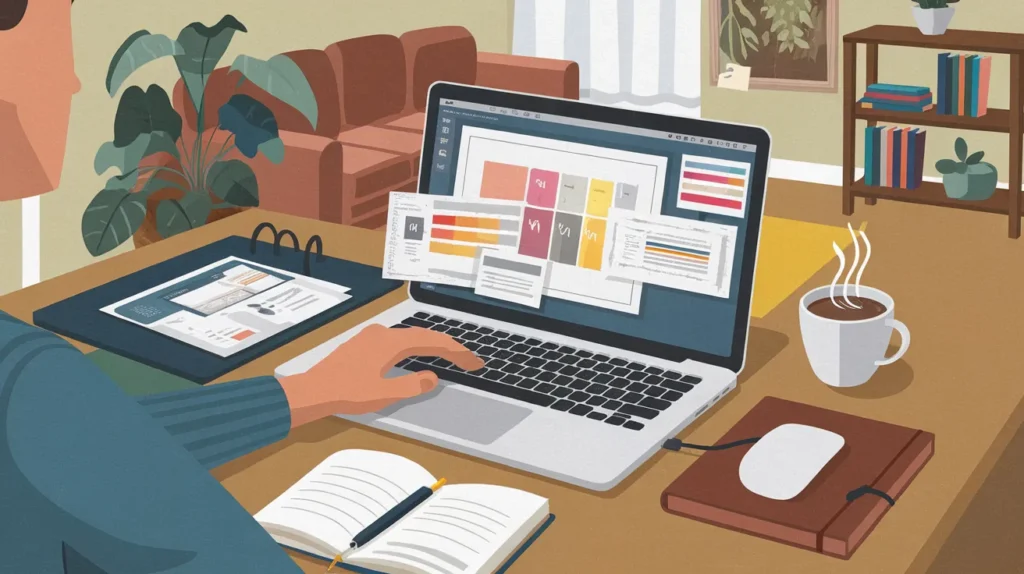
Thousands of successful designers never stepped into a design school classroom. They learned online and built thriving freelance careers anyway. Learning how to become a freelance graphic designer with no degree starts with proving your skills, not collecting credentials.
Why Employers and Clients Care About Your Work, Not Your Diploma
Clients hire you to solve problems. They want a logo for their coffee shop. They need social media graphics for their product launch. They don’t ask where you studied.

Your portfolio answers the only question clients actually care about. Can you deliver what they need? A strong portfolio beats a degree every single time.
Design agencies sometimes require degrees for full-time jobs. Freelance clients operate differently. They scroll through your past work and make a decision. You either can do the job or you can’t.
One designer landed a $3,000 website project after showing just five sample designs. The client never asked about education. They saw quality work and paid for it.
Building Core Design Skills When You’re Starting From Zero
You need to master three software programs first. Adobe Photoshop handles photo editing and digital art. Illustrator creates logos and vector graphics. InDesign builds layouts for brochures and magazines.
Free alternatives exist if you can’t afford Adobe subscriptions. GIMP replaces Photoshop. Inkscape works like Illustrator. Canva covers basic design needs for beginners.
Learning software takes about three months of daily practice. Spend one hour each morning working through tutorials. YouTube offers thousands of free lessons from professional designers.
Design theory matters as much as software skills. Study color theory to understand which colors work together. Learn typography rules so your text looks professional. Practice composition to arrange elements on a page.

Copy existing designs to build muscle memory. Find a poster you admire and recreate it. Match the colors exactly. Use the same fonts. This exercise teaches you how professionals think.
Most beginners skip the boring fundamentals and jump straight to portfolio projects. This approach fails. You need solid foundations before tackling client work.
How to Become a Freelance Graphic Designer with No Degree by Creating Your First Portfolio
Start with fake client projects when you have no real clients yet. Invent a coffee shop and design its complete brand identity. Create a fictional music festival and design the poster.
Your first portfolio needs six pieces minimum. Include two logo designs, two social media graphics, one poster, and one website mockup. This range shows you can handle different project types.
Make each portfolio piece look like a real paid project. Show the logo on a coffee cup. Display the poster in a realistic frame. Present website designs on laptop screens.
Behance and Dribbble give you free portfolio hosting. These platforms also connect you with other designers. Upload your work and write descriptions explaining your design choices.
Many beginners create ten mediocre pieces instead of six excellent ones. Clients remember quality over quantity. Spend two weeks perfecting each portfolio piece.

Remove your weakest work constantly. Your portfolio gets judged by its worst piece. If something looks amateur, delete it immediately.
Finding Your First Three Clients Without Any Professional Experience
Local businesses need design work right now. Walk into ten coffee shops and ask if they need menu designs. Visit small retail stores and offer to redesign their signage.
Offer your first project at half price to build testimonials. You’re not desperate. You’re trading a discount for a case study and review.
Family and friends know business owners. Tell everyone you’re a freelance designer now. Ask for introductions. One warm referral beats fifty cold emails.
Facebook groups for entrepreneurs overflow with people seeking designers. Join five groups in your niche. Answer questions helpfully for two weeks. Then mention your services casually.
Fiverr and Upwork let you start getting paid immediately. Create a profile tonight. Price your services low for the first month. Collect five positive reviews fast.
Your first three clients won’t come from the same source. One might come from a local business. Another finds you on Upwork. The third arrives through a friend’s referral.
Pricing Your Services When You Have No Track Record
Charge $25 per hour when you’re completely new. This rate sounds low but matches your skill level. Raise it to $40 after ten completed projects.
Package pricing works better than hourly rates for most projects. Charge $200 for a logo design. Ask $150 for a set of five social media graphics. Clients prefer knowing the total cost upfront.
Never work for free unless it’s for a registered charity. Free work attracts clients who don’t value design. Cheap clients become paying clients rarely.
Research what other beginners charge in your area. Check Upwork profiles from designers with similar experience. Price yourself in the middle of that range.
Some designers underprice themselves at $10 per hour hoping to win more work. This strategy backfires. Low prices signal low quality to serious clients.
Learning How to Become a Freelance Graphic Designer with No Degree Through Continuous Skill Development
Take one online course every three months to add new skills. Udemy courses cost $15 during sales. Skillshare offers unlimited classes for $30 monthly. Coursera provides free courses from top universities.
Specialize in one design area after your first year. Some designers focus only on logos. Others do just packaging design. Specialists charge double what generalists make.
Study designs you see everywhere in daily life. Notice how restaurant menus organize information. Examine how product packaging uses color. Analyze billboard layouts while driving.
Join design communities to get feedback on your work. Reddit’s design critique threads provide honest opinions. Design Facebook groups offer support from other freelancers.
Most freelancers stop learning after landing steady clients. This mistake caps your income permanently. The designers earning six figures learn something new every single month.
Building a Business Structure That Replaces a Full-Time Income
Track every project hour and earnings in a simple spreadsheet. You’ll spot which services make you the most money. Drop the low-paying work after six months.
Set up a business bank account separate from your personal money. This separation makes tax filing easier. It also helps you see your actual business profits.
Create contracts for every project before starting work. Free contract templates exist on sites like Bonsai and HoneyBook. A simple one-page agreement protects you legally.
Ask for 50% payment upfront and 50% upon completion. This payment structure prevents clients from disappearing without paying. It also covers your time investment.
Save 25% of every payment for taxes. Freelancers pay their own taxes quarterly. Open a separate savings account just for tax money.
Most new freelancers spend everything they earn immediately. Then tax season arrives and they owe thousands. Don’t make this mistake.
Marketing Yourself When You’re Competing Against Degreed Designers
Your story matters more than your credentials when you know how to become a freelance graphic designer with no degree. Tell clients you’re self-taught. Explain how you learned design because you love it.
Instagram works better than any other platform for designers. Post one finished design piece daily. Use hashtags like #logodesign and #graphicdesigner to reach potential clients.
Cold email twenty potential clients each week. Find their contact information on company websites. Write three short sentences explaining how you can help their specific business.
Respond to project requests within one hour. Speed matters enormously on platforms like Upwork. The first three designers who respond win most projects.
Client testimonials replace the credibility a degree would provide. Ask every happy client for a written review. Display these prominently on your portfolio site.
Create free valuable content to demonstrate expertise. Write blog posts about design tips. Make YouTube videos showing your design process. This content proves you know your craft.
Traditional designers with degrees often skip social media marketing completely. You can outwork them easily by showing up consistently online.
Frequently Asked Questions
Can you really become a graphic designer without going to college?
Yes, thousands of successful freelance designers never attended design school. Clients care about your portfolio quality, not your educational background. Self-taught designers compete equally when their work looks professional.
How long does it take to learn graphic design on your own?
You need three to six months to learn basic software and design principles. Getting truly competent takes about one year of daily practice. Most self-taught designers land their first paid client within four months of starting.
What software do I absolutely need to start freelancing?
You need either Adobe Creative Cloud or free alternatives like GIMP and Inkscape. Most clients expect Adobe file formats for final deliverables. Start with free software and switch to Adobe after earning your first $500.
How much can a self-taught freelance designer realistically earn?
Beginners typically earn $1,000 to $2,000 monthly in their first year. After two years, competent designers make $3,000 to $5,000 monthly. Top freelancers with strong specializations earn over $10,000 monthly without degrees.
Do I need to register a business to start freelancing?
You can start freelancing immediately without formal business registration in most places. Register as a sole proprietor once you earn $5,000 to simplify taxes. Check your local laws since requirements vary by location.
Start building your first portfolio piece today using free design software and YouTube tutorials.